What We Are Testing Today
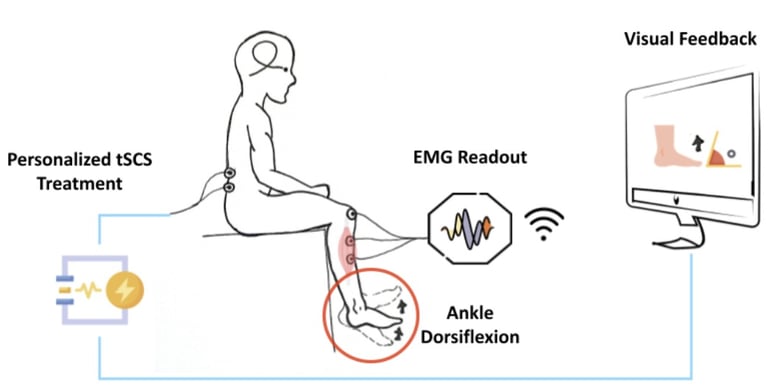
We are exploring how the body adapts and improves movement patterns using a combination of neurosensory stimulation and real-time visual feedback.
Our current tests focus on ankle dorsiflexion—the ability to lift the foot. This motion is essential for walking, climbing stairs, and controlling pedal-operated machinery.
These initial tests are being conducted in collaboration with the Université de Montréal. Patent pending.
Grounded in Science.
Built for You.
PhantasiAI is developed from years of research in adaptive neurosensory stimulation — technology designed to support how your body naturally learns, reconnects, and moves.
Peer-Reviewed Research Behind the Technology
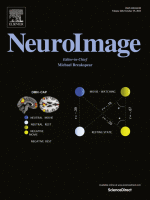
Enhancing visual motion discrimination by desynchronizing bifocal oscillatory activity — NeuroImage (2021)
Roberto F. Salamanca-Giron, Estelle Raffin, Sarah B. Zandvliet, Martin Seeber, Christoph M. Michel, Paul Sauseng, Krystel R. Huxlin, Friedhelm C. Hummel
https://www.sciencedirect.com/science/article/pii/S1053811921005759
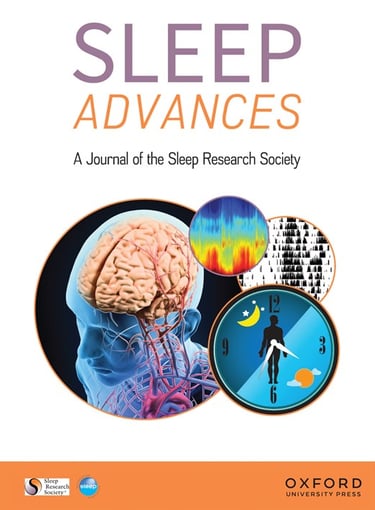
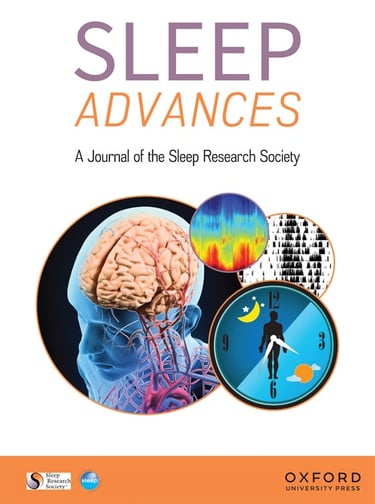


Impact of spindle-inspired transcranial alternating current stimulation during a nap on sleep-dependent motor memory consolidation in healthy older adults — Sleep Advances (2024)
Maëva Moyne, Manon Durand-Ruel, Chang-Hyun Park, Roberto Salamanca-Giron, Virgine Sterpenich, Sophie Schwartz, Friedhelm C Hummel, Takuya Morishita
https://academic.oup.com/sleepadvances/article/6/2/zpaf022/8093620
Sequence action representations contextualize during early skill learning - eLife (2025)
Debadatta Dash, Fumiaki Iwane, William Hayward, Roberto F Salamanca-Giron, Marlene Bönstrup, Ethan R Buch, Leonardo G Cohen
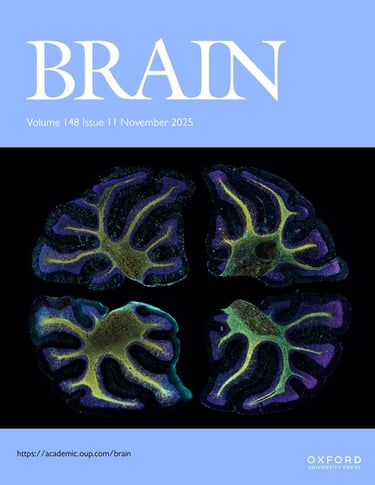
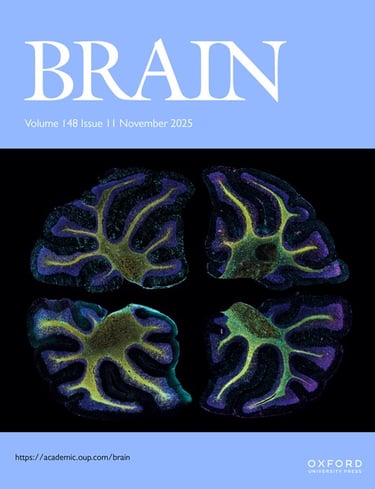
Boosting hemianopia recovery: the power of interareal cross-frequency brain stimulation - Brain (2025)
Estelle Raffin, Michele Bevilacqua, Fabienne Windel,Pauline Menoud, Roberto F. Salamanca-Giron, Sarah Feroldi, Sarah B. Zandvliet, Nicola Ramdass, Laurijn Draaisma, Patrik Vuilleumier, Adrian G. Guggisberg, Christophe Bonvin, Lisa Fleury, Krystel R. Huxlin, Elena Beanato and Friedhelm C. Hummel
https://academic.oup.com/brain/advance-article/doi/10.1093/brain/awaf252/8322719
The following studies demonstrate the scientific principles that inspire PhantasiAI — from personalized stimulation to its effects on motor learning, coordination, and cognitive performance.
Frequently asked questions
What is PhantasiAI?
PhantasiAI is a neuro-AI system enhancing movement, recovery, and performance.
How does neuro-AI work?
It uses real-time brain and body data to adapt and optimize your movement naturally.
Who benefits from PhantasiAI?
Companies and frontline workers seeking to enhance productivity, accelerate performance and recovery, and reduce training time.
Is it safe to use?
Yes, PhantasiAI is designed with safety and comfort as top priorities.
How do I get started?
Join the movement by contacting us or visiting our product page to learn more.

Join the Movement
Be a part of the next wave of neuroAI and human augmentation.